
Trump’s $1M Dinner Rewrites Chip Policy: How Nvidia Got Its China Lifeline

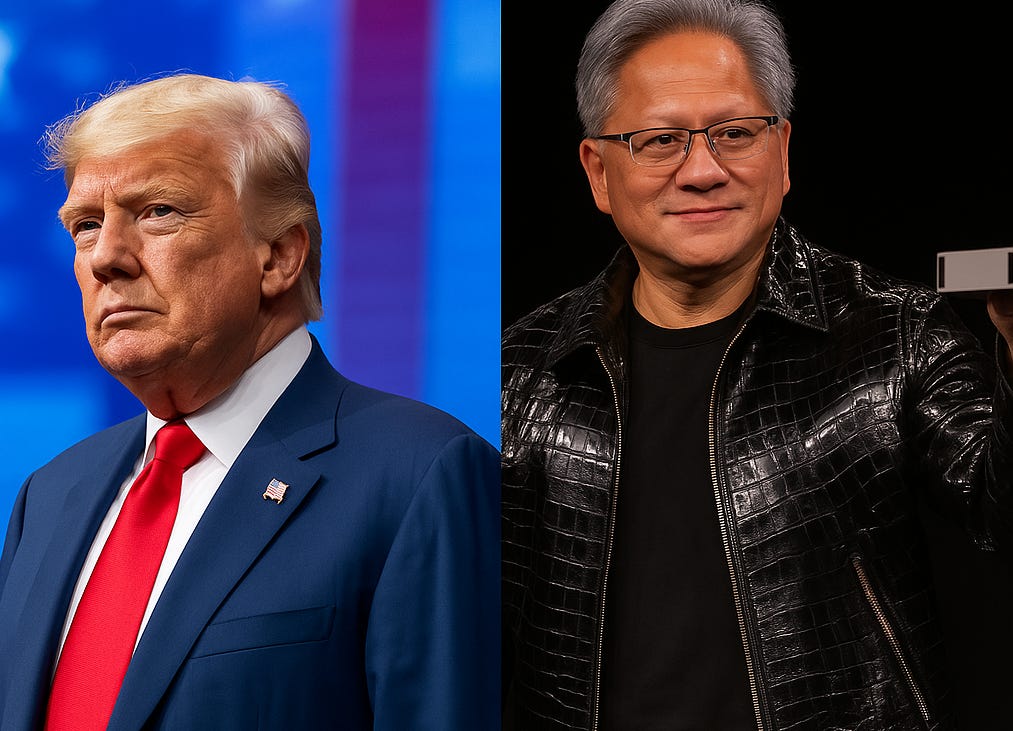
In a dramatic—and highly scrutinized—reversal, the Trump administration has backed off its planned ban on Nvidia’s H20 GPU exports to China. The policy shift followed a $1 million-per-plate dinner at Mar-a-Lago, where Nvidia CEO Jensen Huang reportedly made a direct appeal to former President Donald Trump.
The result? A temporary lifeline for Nvidia’s China sales—and a revealing snapshot of how billion-dollar deals, global AI supremacy, and political power are increasingly entangled.
Inside the Mar-a-Lago Deal
Nvidia's H20 chip was days away from being blacklisted. Then came the dinner.
Held at Trump’s Florida estate, the exclusive Mar-a-Lago event drew elite business leaders willing to pay $1 million each for access. Jensen Huang wasn’t just attending—he was lobbying. Reports indicate he assured Trump that Nvidia would ramp up investment in U.S.-based AI infrastructure in exchange for continued H20 sales to China.
That investment pledge was reportedly enough to sway the administration. By the next day, the ban was paused—at least temporarily.
“Everything, including government policy, is openly for sale.” — anonymous D.C. strategist
Why the H20 Chip Matters So Much
The H20 isn’t Nvidia’s most powerful chip, but it’s the most powerful one the U.S. still allows to be exported to China. It’s a custom-tailored product, specifically engineered to comply with current export restrictions—just under the threshold of “militarily significant.”
Chinese AI companies like Alibaba, ByteDance, Tencent, and DeepSeek depend on the H20 to power their large language models and AI services. And they’ve been buying a lot—to the tune of $16 billion in Q1 2025 alone.
That figure isn’t just impressive. It’s existential for Nvidia.
Market Reaction: Nvidia Surges, Wall Street Cheers
Wall Street loved the move. Following the announcement, Nvidia stock jumped 18% in a single day.
This surge came alongside Trump’s announcement of a 90-day pause on most new tariffs—except on China. Chinese goods will now face 125% tariffs, but AI chips? Nvidia’s still shipping—for now.
Investors see this as a win-win for Nvidia:
U.S. investment PR boost
Continued China sales revenue
Stockholder value preserved
But it’s a risky game.
A Temporary Reprieve or Structural Shift?
This policy twist exists in a complex regulatory maze. The Biden-era AI Diffusion Rule, set to kick in on May 15, 2025, would shut down all U.S. AI chip exports to China, regardless of previous exceptions like limited power or volume.
Will Trump modify or override that rule? Will Nvidia get a custom export license?
Unclear. But this dinner deal may be a narrow, short-term window before the hammer drops in May.
What It All Means: Power, AI, and Policy for Sale?
The optics are stark: one dinner. One CEO. A $1 million entry fee. A complete reversal of national tech policy.
Whether you see it as strategic diplomacy or corporate capture, the Nvidia-Trump dinner reveals how personal relationships and campaign financing now shape the frontier of AI policy.
Meanwhile, China still gets the chips. Nvidia keeps its revenue. And U.S. export policy is left with a credibility problem.
What to Watch Next
Will Trump override the AI Diffusion Rule before May 15?
Does Biden respond with his own tech containment play?
Will this set a precedent for “pay-to-play” tech diplomacy?
As the AI arms race accelerates, Nvidia just bought time. But for the U.S., the real challenge isn’t policy reversals—it’s deciding whether national security and tech leadership are still non-negotiables.